
 GuessPick Team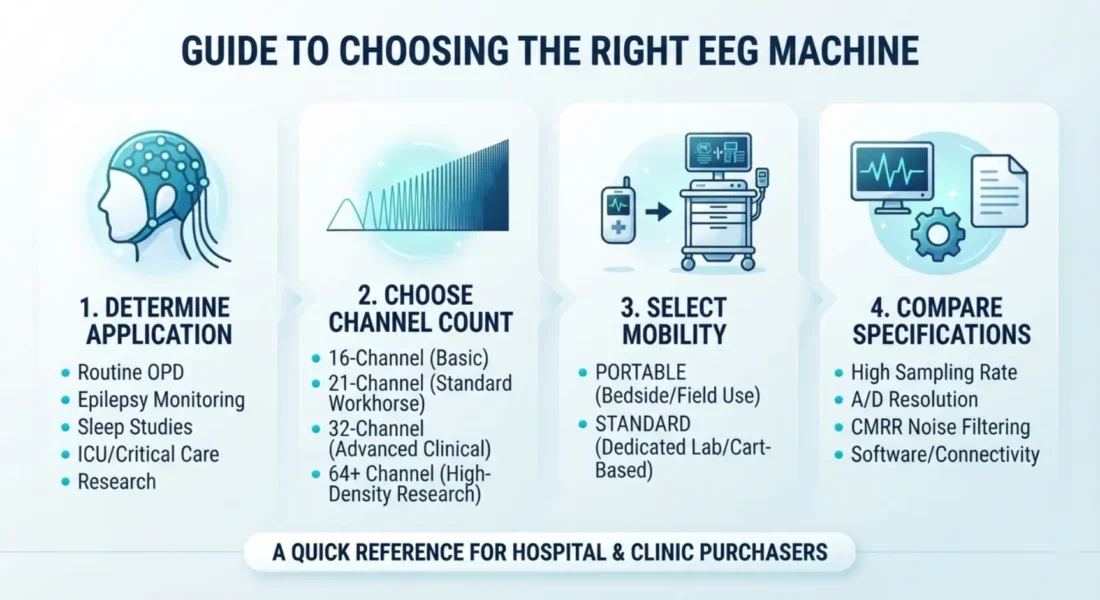
| Feature | Details |
|---|---|
| Primary Function | Records and displays the brain’s electrical activity through scalp electrodes. |
| Common Applications | Epilepsy diagnosis, sleep studies, brain injury assessment, ICU monitoring, and research. |
| Available Types | Digital, Portable, Ambulatory, Video, and PC-based EEG machines. |
| Typical Channel Count | 8 to 32 channels (higher counts up to 256 available for specialized research). |
| Suitable For | Hospitals, neurology clinics, sleep labs, medical colleges, and research institutes. |
EEG Machine Price List (India)
⚠️ Prices below are indicative and collected from various dealer/market listings as of September 2026. Actual prices may vary based on dealer, location, GST, installation, warranty terms, and ongoing offers. Please confirm final pricing directly with the manufacturer or authorized dealer before purchase.
16-24 Channel Range (Entry to Mid-Level)
| Product Name | Channels | Indicative Price (Incl. Tax)* |
|---|---|---|
| Neuro Compact 24 Channel Portable EEG Machine | 24 | ₹115,000 |
| 24 Channel EEG Machine – Portable USB Brain Mapping Device | 24 | ₹119,000 |
| RMS Maximus Portable EEG Machine | 24 | ₹119,700 |
| Allengers VIRGO 24 Channel EEG Machine | 24 | ₹138,000 |
| Medicaid Neuro Compact NC 2400 | 24 | ₹138,000 |
| RMS Brain View Plus 24 Channel EEG Machine | 24 | ₹139,000 |
| Medicaid NC Series Neuro Compact Portable EEG Machine | 24 | ₹148,100 |
| Clarity Traveller EEG BrainTech 24+ | 24 | ₹225,800 |
32 Channel Range (Standard/Mid-Tier)
| Product Name | Channels | Indicative Price (Incl. Tax)* |
|---|---|---|
| RMS Maximus Portable EEG Machine | 32 | ₹132,300 |
| Medicaid NeuroMax 32 Series EEG Machine | 32 | ₹150,950 |
| RMS Super Spec 32 Channel EEG Machine | 32 | ₹168,000 |
| Medicaid Neuromax (NMX-32) Portable Video EEG Machine | 32 | ₹175,000 |
| Clarity BrainTech 32+ | 32 | ₹283,500 |
| Natus NicoletOne EEG Machine | 32 | ₹1,521,000 |
High-Channel / Specialized
| Product Name | Channels | Indicative Price (Incl. Tax)* |
|---|---|---|
| Medicaid NeuroMax 64 Series EEG Machine | 64 | ₹647,000 |
Combined / Multi-Modality
| Product Name | Function | Indicative Price (Incl. Tax)* |
|---|---|---|
| Medicaid BPE-591 Brief Pulse ECT Machine | ECT + EEG + ECG Monitoring | ₹175,000 |
*Prices are approximate and subject to change. Contact the manufacturer or dealer for a current formal quote.
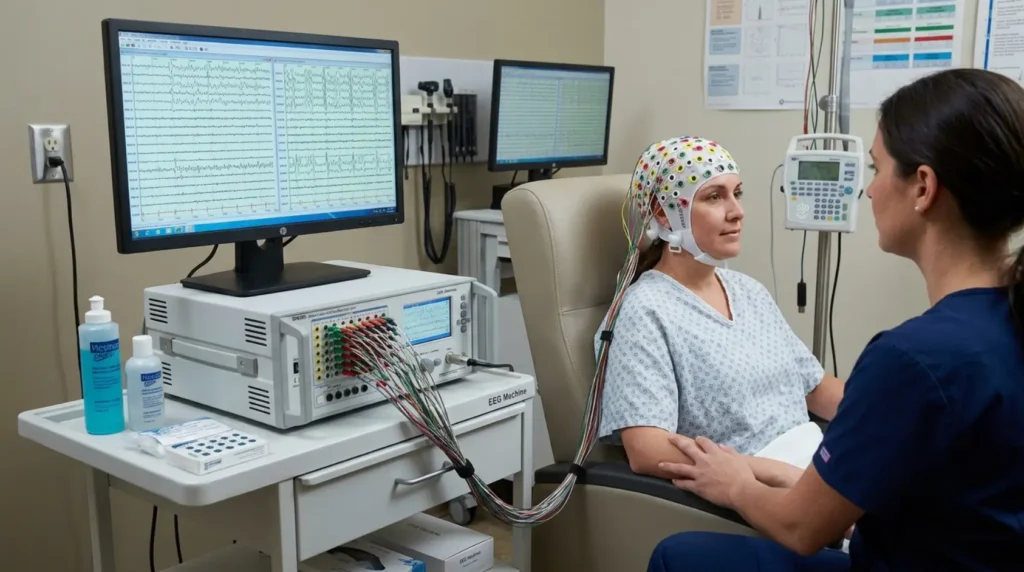
What Is an EEG Machine and How Does It Work?
-
- Electrode Placement: Technicians attach small electrodes to specific spots on the patient’s scalp using a conductive gel or paste.
- Signal Amplification: The machine’s internal amplifier boosts the faint electrical signals coming from the brain.
- Artifact Filtering: Built-in filters clean up background noise caused by muscle movements or external electrical interference.
- Digital Display: The clean signal converts into a digital waveform, allowing neurologists to view the data live or save it for future reporting.
How to Choose the Right EEG Machine
-
- Routine OPD or Bedside Recording
-
- Recommended Instrument: Portable EEG machine (16 to 24 channels)
-
- Epilepsy Monitoring Units (EMUs)
-
- Recommended Instrument: Video EEG machine (24 to 32 channels)
-
- Home or Long-Duration Recording
-
- Recommended Instrument: Ambulatory EEG machine
-
- ICU and Critical Care
-
- Recommended Instrument: Digital EEG with continuous monitoring software
-
- Medical Colleges & Teaching Hospitals
-
- Recommended Instrument: PC-based EEG with advanced reporting and archiving software
-
- Research and Neuroscience Labs
-
- Recommended Instrument: High-channel digital EEG (32 to 256 channels)
-
- Routine OPD or Bedside Recording
Understanding Channel Counts: How Many Do You Need?
-
- 16-Channel EEG Machine: The entry-level option. Best for basic, routine clinical recordings where advanced mapping isn’t required.
- 21-Channel EEG Machine: The standard industry workhorse. Most everyday clinics opt for this setup because it offers ideal diagnostic detail at a reasonable cost.
- 32-Channel EEG Machine: A mid-tier upgrade providing a significantly clearer, more detailed map of localized brain activity.
- 64 to 256-Channel EEG Machines: High-density systems reserved for pre-surgical brain mapping, advanced neuroscience research, and specialized academic studies.
Portable vs. Standard Cart EEG Machines
| Feature | Portable EEG | Standard / Cart-Based EEG |
|---|---|---|
| Mobility | High (easy to move between wards) | Low (stationary setup) |
| Channel Capacity | Moderate (8 to 24 channels) | High (24 to 32+ channels) |
| Ideal Setting | Emergency rooms, bedside ICU, small clinics | Dedicated neurology departments |
| Best For | Quick routing and mobile diagnostics | High-volume, complex clinical trials |
Crucial Technical Specifications to Compare
-
- Sampling Rate: Dictates how many times per second the brain signal is digitized. Higher sampling rates capture fast, transient brain activity more accurately.
- A/D Resolution: The bit depth of the analogue-to-digital converter (typically 16-bit or 24-bit). Higher bit depth yields cleaner, more precise signal tracking.
- Common Mode Rejection Ratio (CMRR): Measures how effectively the machine filters out ambient environmental noise. Look for higher decibel (dB) ratings.
- Software Features: Ensure the accompanying software supports seamless montage selection, automated event marking, remote data review, and easy file exports (PDF, DICOM, or network sharing)
Frequently Asked Questions (FAQs)
It is primarily used to diagnose and classify epilepsy, evaluate sleep disorders, assess brain injuries or encephalopathy, and monitor brain function in critically ill or sedated ICU patients.
Leading diagnostic brands include RMS, Allengers, Medicaid, Natus, and Clarity Medical. The best brand depends on your facility’s specific requirements for software compatibility, local service support, and hardware portability.
No. An EEG is completely non-invasive. The electrodes sit on top of the scalp using temporary paste and do not cause any pain or discomfort.
Q: What is the price range of an EEG machine in India?
EEG machine prices in India start around ₹1.5 lakh for basic portable units and go up to ₹15-20 lakh for advanced multi-channel hospital systems. Price depends on channel count, software features, brand, and after-sales support. Small clinics usually go for 8-16 channel machines, while big hospitals prefer 32 or 64-channel systems.
Q: What factors affect the cost of an EEG machine?
Channel count matters most. More channels give better resolution but cost more. Brand, software licensing, build quality, and whether it’s new or refurbished also play a role. Import duties add to the price for foreign brands. Warranty and installation support are sometimes included, so always confirm what’s bundled before comparing quotes.
Q: Is a portable EEG machine cheaper than a standard hospital EEG unit?
Yes. Portable EEG machines have fewer channels and simpler features, so they cost less, usually ₹1.5 lakh to ₹5 lakh. Hospital-grade units built for continuous monitoring or video-EEG cost ₹10 lakh and above. Portable machines suit home use or small clinics, not intensive diagnostic work.
Q: How many channels does an EEG machine need for clinical use?
Most clinics manage well with 16 to 21 channels, following the standard 10-20 electrode placement system. This covers routine needs like seizure evaluation and sleep studies. Larger hospitals prefer 32 to 64 channels for detailed mapping. Basic 8-channel units work fine for simple screening only.
Q: Which brands make reliable EEG machines in India?
Nihon Kohden, Natus, Compumedics, and Cadwell are trusted international brands, popular with larger hospitals. Indian manufacturers like RMS and Clarity Medical offer solid, budget-friendly options for smaller clinics. Your choice usually depends on budget, service network in your area, and whether you need video-EEG features.
Q: Is it better to buy a new or refurbished EEG machine?
Refurbished machines can save 40-60% compared to new ones, which helps smaller clinics on tight budgets. Just verify the seller’s credibility and calibration accuracy first. New machines cost more but come with full warranty and updated software, better for clinics with high patient volume.
Q: What is the average EEG test cost for a patient in India?
A standard EEG test usually costs between ₹800 and ₹3,000, depending on city and hospital type. Video-EEG or ambulatory monitoring over several hours costs more, often ₹5,000 to ₹15,000. Metro cities like Delhi and Mumbai tend to charge more than smaller towns.
Q: Do government hospitals offer EEG tests at lower rates?
Yes. Government hospitals and medical colleges often charge just ₹200 to ₹500 for a basic EEG since it’s subsidized. The trade-off is longer waiting time. Private clinics charge more but offer faster scheduling and added comfort for the same test.
Q: Are EMI or financing options available for buying an EEG machine?
Yes. Most authorized dealers offer EMI plans for machines above ₹3 lakh. Banks and NBFCs also provide equipment loans for clinics and diagnostic centres. It’s worth negotiating directly with suppliers too, since many offer flexible terms, especially for bulk purchases.
Q: What additional costs come with owning an EEG machine besides the purchase price?
Buying the machine is only step one. Budget for annual maintenance (AMC), usually 8-10% of the purchase price yearly, plus electrodes, gel, consumables, and software updates. Calibration checks and occasional repairs add up too. Many clinics forget these recurring costs when comparing prices upfront.
Q: How long does an EEG machine typically last before needing replacement?
With good maintenance, an EEG machine can last 8-12 years. Electrodes and cables wear out faster and need regular replacement. Keep it away from moisture and dust, and calibrate it regularly. Software often becomes outdated sooner, so many clinics upgrade systems every 5-6 years.
Q: Can small clinics afford to invest in an EEG machine?
It’s more affordable than most think. Portable EEG machines start around ₹1.5-2 lakh, manageable for a mid-sized clinic, especially with financing. The real question is patient volume. If you see enough neurology cases weekly, owning one pays off in a couple of years by saving on referral fees.
Q: Does insurance cover the cost of an EEG test in India?
Most health insurance plans cover EEG tests when prescribed for conditions like epilepsy or seizures, especially as part of hospitalization. Standalone diagnostic EEGs without hospitalization may not always be covered. Check your policy’s outpatient diagnostic benefits before assuming reimbursement.
Q: What should hospitals check before purchasing an EEG machine?
Beyond price, check for FDA or CE certification, service availability in your city, and software compatibility with hospital systems. Ask about technician training too, since even a good machine underperforms without trained staff. Reading reviews from other hospitals using the same brand helps avoid surprises later.
Q: Can I negotiate the price when buying an EEG machine from a supplier?
Yes, and you should. List prices often have room for negotiation, especially on bundled packages with consumables, warranty, or training. Year-end sales or bulk orders usually get better discounts. Get quotes from at least three suppliers before finalizing for better leverage. (visit to get more blog)
Sign in to share your opinion
Sign in with Google